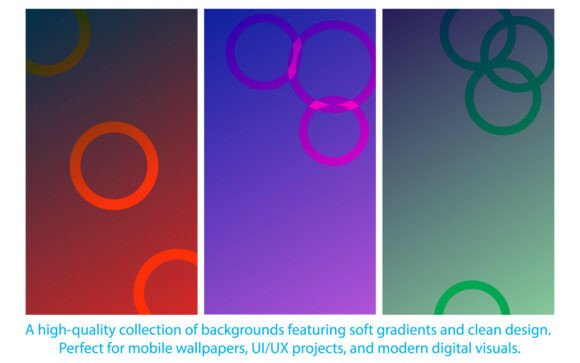
Abstract Gradient Geometric Circle BG: A Modern Design Solution for Versatile Projects
Designers today are constantly seeking visual elements that balance aesthetics with adaptability. The Abstract Gradient Geometric Circle BG collection offers a compelling option for those looking to enhance digital and print projects with a contemporary, scalable background style. This set merges soft gradient transitions with structured geometric circles, creating a visual language that's both dynamic and minimalist. Understanding how this design approach fits within broader design trends and resource options can help creators make informed decisions based on their specific needs.
What Sets Abstract Gradient Geometric Circle BG Apart?
The Abstract Gradient Geometric Circle BG is a vector-based background collection that stands out due to its clean composition and modern visual language. Each design features a combination of soft color gradients layered with precisely shaped geometric circles. This pairing results in a design that feels both organic and intentional—ideal for applications where visual clarity and subtle movement are desired.
Unlike static flat-color backgrounds or overly complex patterns, these designs strike a middle ground. The use of gradients introduces depth and warmth, while the geometric elements provide structure and balance. This dual-layered approach makes the collection suitable for a wide range of applications without overwhelming the foreground content.
Comparing Design Styles and Formats
When evaluating background options, it's important to consider how Abstract Gradient Geometric Circle BG compares to other commonly used design styles. Traditional flat design backgrounds are simple and functional but often lack visual interest. On the other hand, complex illustrative backgrounds can be visually rich but may distract from core content or require heavier file sizes.
- Flat design offers simplicity and fast load times but may not provide the visual depth needed for more expressive projects.
- Photographic backgrounds can be powerful but are often less flexible and may not scale cleanly across different resolutions.
- Pattern-based vector designs can be scalable but may feel repetitive or lack the subtle nuance offered by gradient-based compositions.
In contrast, the Abstract Gradient Geometric Circle BG format delivers a scalable, non-repetitive design that maintains visual interest without compromising performance. Its vector format ensures compatibility with a variety of design tools and output sizes, making it a versatile choice across platforms.
Strengths and Practical Use Cases
One of the primary advantages of this background collection is its editability. Since each file is vector-based, users can easily modify colors, shapes, and gradient directions to align with brand guidelines or project themes. This flexibility makes the Abstract Gradient Geometric Circle BG particularly valuable for branding, UI/UX design, and marketing materials where consistency and customization are key.
Common use cases include:
- Mobile app splash screens and interface backgrounds
- Website headers and landing page sections
- Presentation slides for business or educational purposes
- Print materials such as posters, brochures, and infographics
Additionally, the SVG format option allows for seamless integration into web development workflows. Developers can implement these backgrounds without sacrificing performance, as vector files tend to be lightweight and resolution-independent.
Tradeoffs and Considerations
While the Abstract Gradient Geometric Circle BG offers many benefits, it may not be the ideal choice for every scenario. For instance, in environments where minimalism is pushed to the extreme—such as ultra-minimalist websites or high-contrast accessibility-focused interfaces—these backgrounds might introduce too much visual complexity.
Designers should also consider the learning curve associated with vector editing tools. While the collection includes AI, EPS, and SVG formats, making adjustments requires familiarity with software like Adobe Illustrator or Inkscape. For users who prefer plug-and-play solutions without customization, simpler PNG-based backgrounds may be more straightforward, albeit less scalable.
When Abstract Gradient Geometric Circle BG Is the Right Choice
This background style shines in situations where visual appeal and adaptability are equally important. If your project requires a background that:
- Can scale across multiple devices and formats
- Offers a modern aesthetic aligned with current design trends
- Allows for color and shape customization
- Complements rather than competes with foreground content
When to Consider Alternatives
There are scenarios where alternative background styles may be more appropriate. For example:
- If your design requires a highly realistic or textured look, photorealistic backgrounds might be a better fit despite their larger file sizes.
- If you're working within strict accessibility guidelines that limit color contrast or gradient usage, flat color or monochrome backgrounds could offer a more inclusive solution.
- If ease of use is more critical than scalability, PNG or JPEG-based background sets may be preferable for their plug-and-play nature.
Designers should also evaluate the overall tone of their project. The Abstract Gradient Geometric Circle BG leans toward a sleek, contemporary feel. If the intended aesthetic is more rustic, organic, or vintage-inspired, other background styles may better support that visual narrative.
Making the Right Design Decision
Ultimately, choosing the right background depends on the intersection of visual goals, technical requirements, and brand identity. The Abstract Gradient Geometric Circle BG provides a well-rounded option for those seeking a modern, scalable, and editable background solution. Its combination of gradient depth and geometric structure offers a versatile canvas that adapts to a wide range of design contexts.
However, like any design resource, it's not a one-size-fits-all solution. By understanding its strengths, limitations, and how it compares to alternative options, designers can make informed choices that enhance their projects without unnecessary complexity or compromise.